Poor vision is one of the world’s most neglected crises: it steals productivity, isolates people and erodes their dignity.
2.2 billion
people live with vision impairment
1 billion
cases could have been prevented or corrected
826 million
people have near-vision loss left uncorrected, mostly from presbyopia
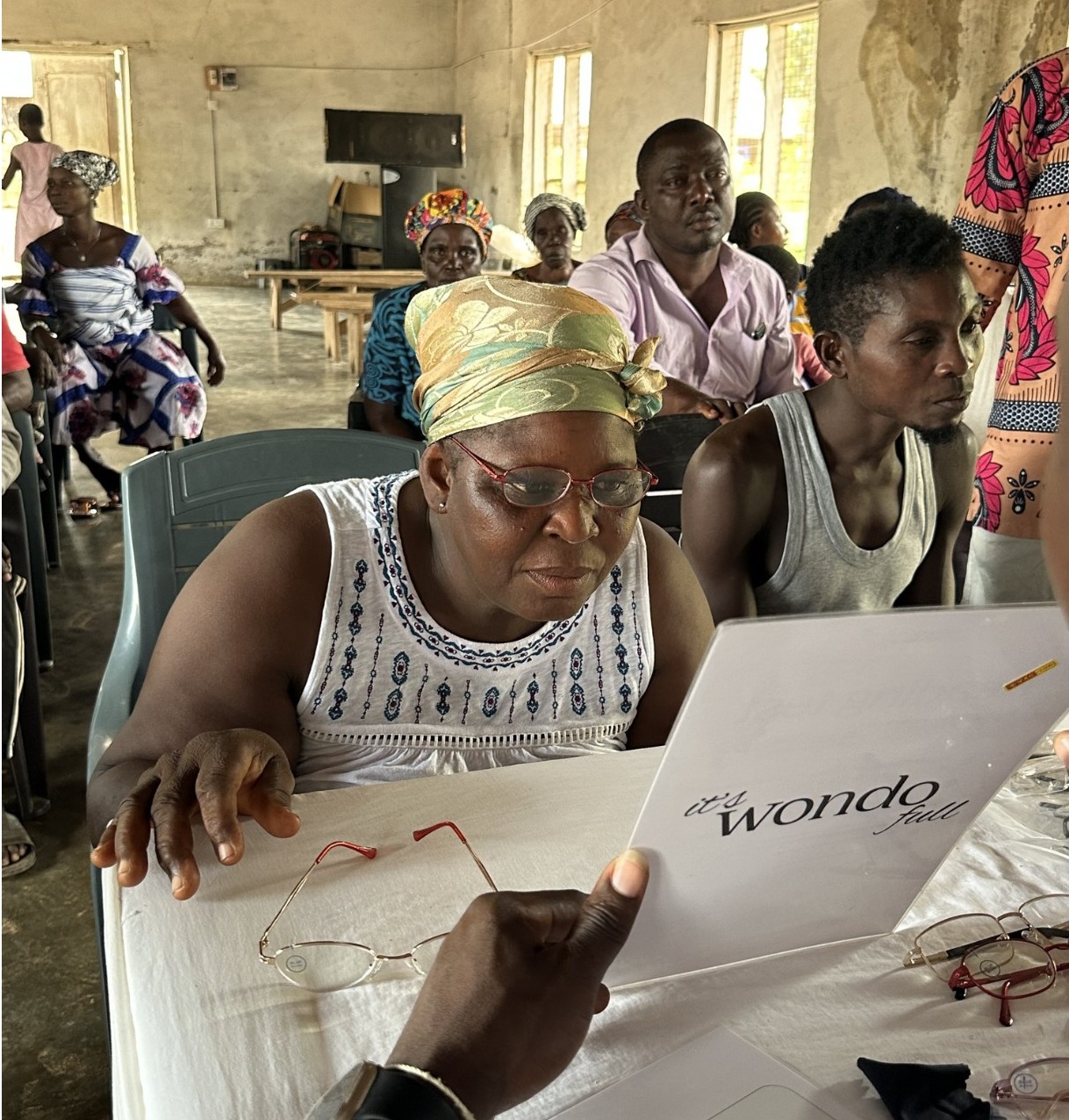
Trying reading glasses for the first time.
WHAT IS
Presbyopia?
/ˌprez.biˈoʊ.pi.ə/ NOUN the natural, age-related loss of near vision.
From around 40, the eye’s lens gradually loses its ability to focus up close. Small print, fine work and anything held in the hands slowly becomes a blur.
It happens to everyone, and it begins during people’s most economically productive years.
Presbyopia is not a complex disease. It is completely correctable with a simple pair of reading glasses.
IN SUB-SAHARAN AFRICA
A silent crisis
37.5%
age-standardised prevalence of uncorrected presbyopia among adults aged 50 and over in 2020
37.8 million
people aged 50 and over living with uncorrected presbyopia in 2020
38.6%
age-standardised prevalence among women aged 50 and over in 2020
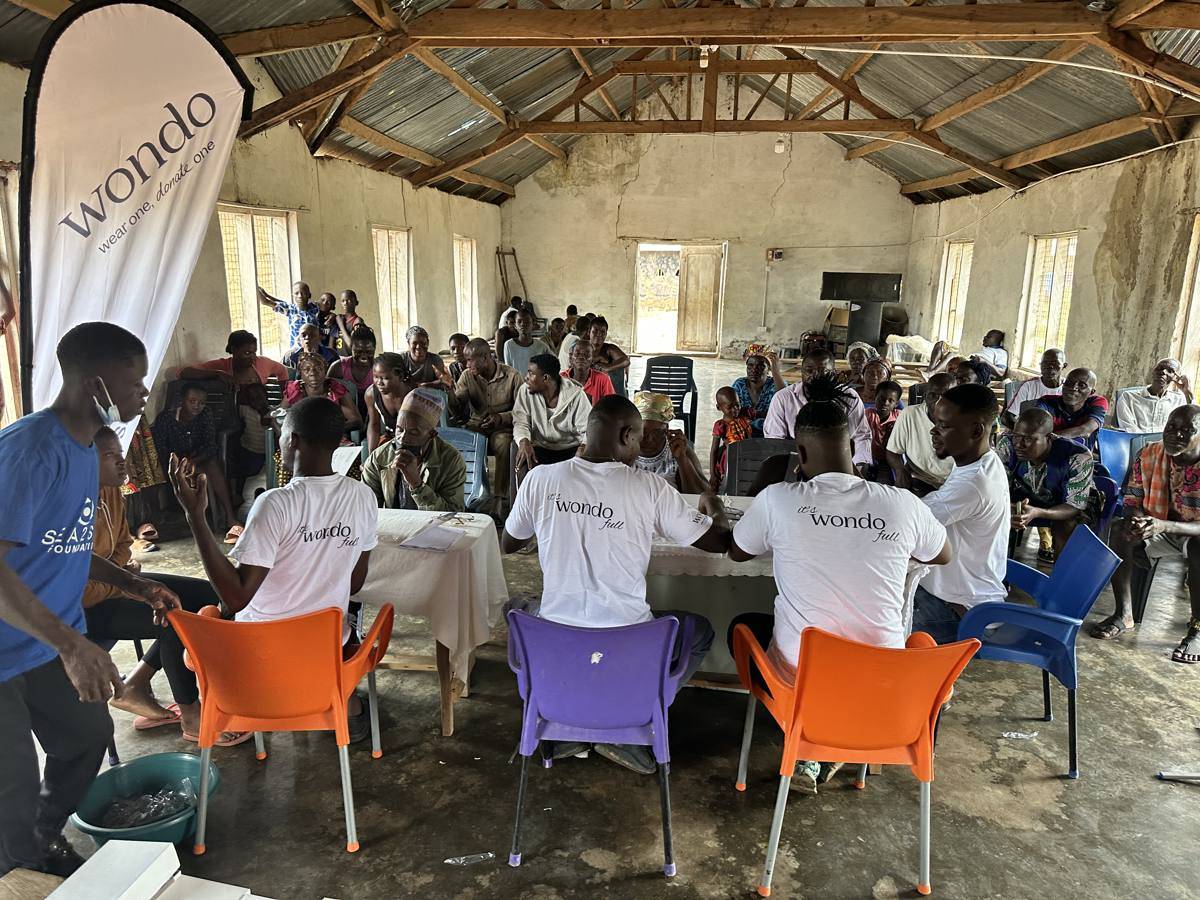
A full village hall on a Wondo distribution day: the need is everywhere.
EVERYDAY LIFE
Millions cannot…
READ MEDICINE LABELS
Taking the wrong dose becomes a daily risk.
THREAD NEEDLES
Seamstresses and tailors lose their livelihood.
COUNT MONEY
Vendors and traders struggle to run their business.
HELP WITH HOMEWORK
Parents and grandparents can no longer support children at school.
Not because they are blind. Because they lack reading glasses.
WHO IT AFFECTS
The people who keep communities running
FARMERS
ARTISANS
VENDORS
TEACHERS
FISHERMEN
GRANDPARENTS
Women and rural communities are disproportionately affected: they face the greatest barriers to eye care, with clinics far away and costs out of reach.
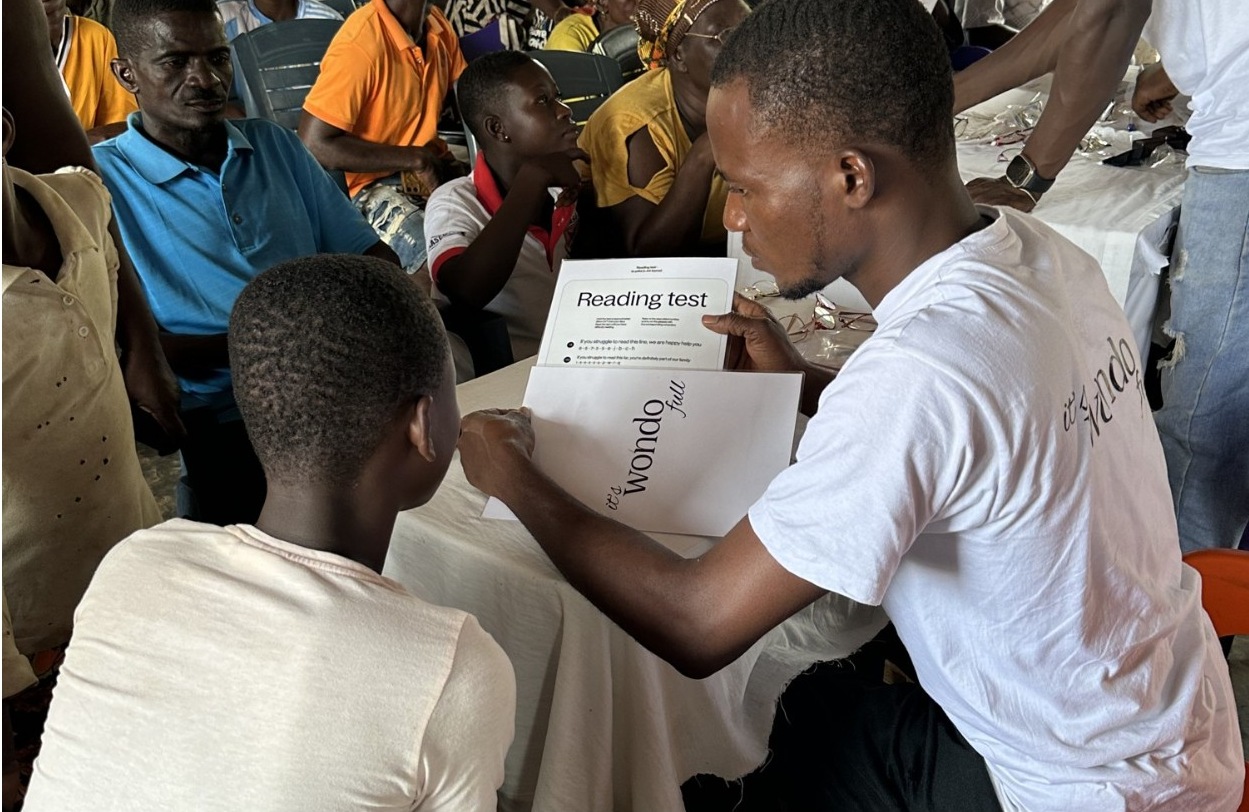
A simple near-vision reading test.
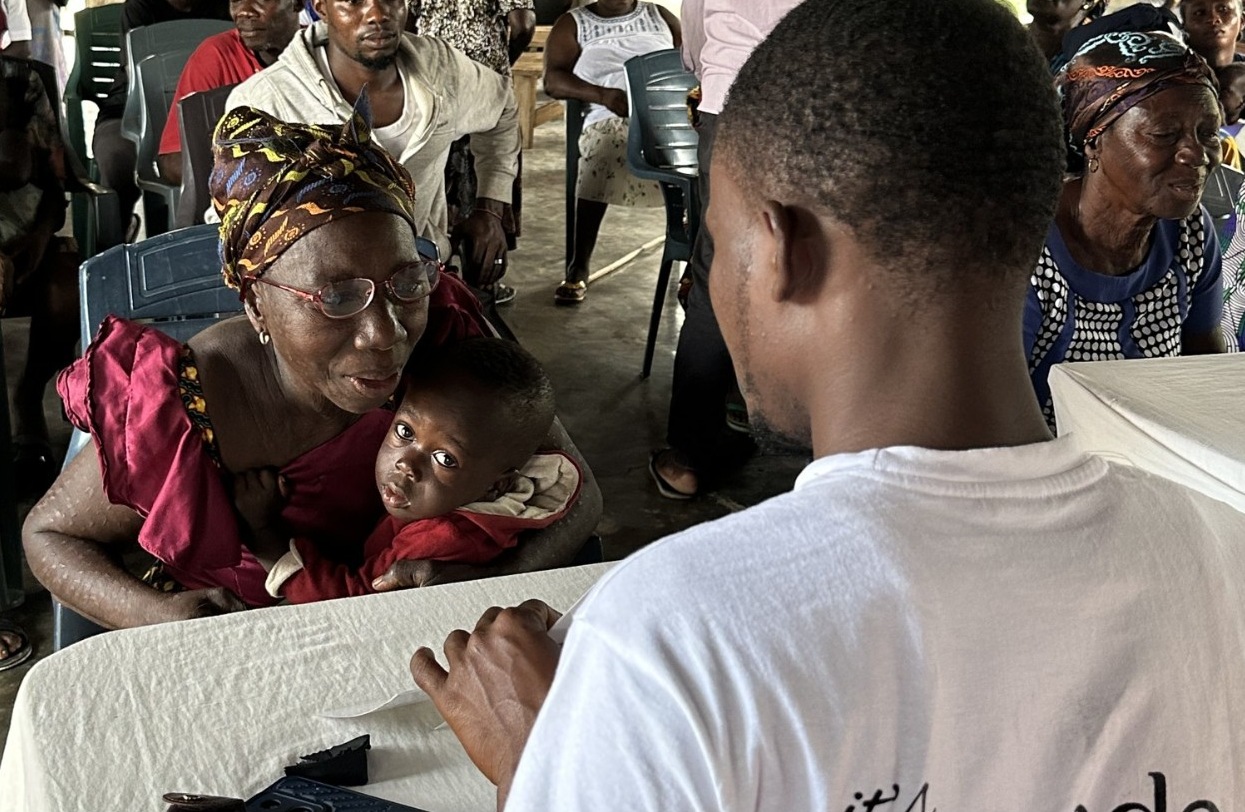
Grandparents who can see clearly can care for the next generation.
THE GOOD NEWS
The tragedy is not medical complexity. Presbyopia is completely correctable.